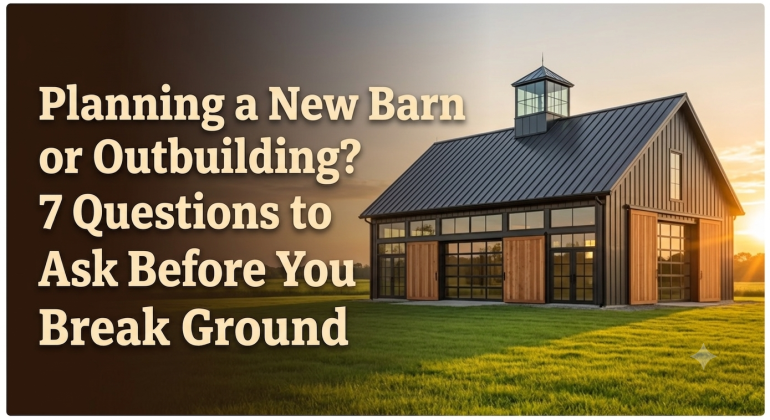
Whether you’re raising cattle in the Oklahoma panhandle, running equipment out of a shed in western Kansas, or storing feed through a Wyoming winter, a new barn or outbuilding is one of the biggest investments you’ll make in your property. Get the planning right, and you’ll have a structure that works for decades. Get it wrong, and you’re looking at costly changes down the road — or a building that never quite fits how you actually use your land.
Before you call a contractor or sign off on a design, here are seven questions every landowner should answer first.
1. What Will You Actually Use the Building For?
This sounds obvious, but it’s the question most people rush past — and it’s the one that shapes everything else. A barn built for livestock has different ventilation, flooring, and stall requirements than a building meant for equipment storage or hay. An implement shed needs wide, clear-span doors and enough height to move machinery in and out. A multi-purpose building trying to do all three often ends up compromising on each. Before anything else, list out:- What will be stored or housed inside (animals, equipment, feed, vehicles, hay)
- How often you’ll need to move things in and out
- Whether you need climate control, insulation, or just a dry, covered space
2. What Size Do You Actually Need — Today and in 5 Years?
Undersizing is the most common regret we hear from clients. It’s tempting to build for exactly what you need right now, but most operations grow — more head of cattle, a second tractor, more hay to store through winter. Building slightly larger up front is almost always cheaper than adding on later. A good rule of thumb: figure out your current need, then ask what your operation could realistically look like in five years. If there’s a reasonable chance you’ll expand, size for it now.3. Does Your Site Have the Right Ground, Drainage, and Access?
Where you build matters as much as what you build. Poor drainage can undermine a foundation over time, and a site that floods seasonally will cause problems no matter how well the structure itself is built. Before finalizing a location, consider:- Natural water flow and drainage patterns across the property
- Distance from existing utilities (power, water) if the building will need them
- Access for large trucks and equipment during construction — and afterward
- Local soil conditions, which can vary significantly across Oklahoma, Kansas, Colorado, and Wyoming and affect foundation requirements
4. What Are the Local Permitting and Zoning Requirements?
Permitting rules vary widely by county and state, and they can catch first-time builders off guard. Some rural counties have minimal requirements for agricultural buildings; others require setbacks, permits, or engineering approval — especially near city limits or in areas with floodplain restrictions. Before you plan too far ahead, find out:- Whether your county requires a building permit for ag structures
- Setback requirements from property lines and roads
- Any HOA or municipal restrictions if you’re near a city limit
5. Post-Frame, Metal, or Traditional Construction — Which Fits Your Needs?
Not all barns and outbuildings are built the same way. Post-frame (pole barn) construction is popular for agricultural buildings because it’s cost-effective and allows for wide, open interiors without support columns getting in the way. All-metal buildings offer durability and low maintenance. The right choice depends on your budget, intended use, and how long you want the building to last with minimal upkeep. This is a good conversation to have directly with your builder — the best material and framing method really depends on what the building needs to do and how it will hold up to your local weather, from Wyoming wind to Oklahoma humidity.6. What’s the Realistic Timeline — Including Weather?
Construction timelines across this region are heavily influenced by weather. A project that breaks ground in early spring in Oklahoma might move very differently than one starting in late fall in Wyoming or the higher elevations of Colorado. Ask your builder:- What their realistic timeline looks like given the season
- How weather delays are typically handled
- When materials will be ordered and whether current lead times could affect your start date
7. What Does the Contractor’s Track Record Actually Look Like?
Anyone can put up a building. Not every contractor has the regional experience, agricultural knowledge, and local reputation to do it right. Before you commit, ask:- How long have they been building in your specific area
- Can they show examples of similar buildings — barns, implement sheds, ag structures — they’ve completed nearby
- Are they familiar with your county’s permitting process
- What does their reporting and communication process look like during the build